Why are Zestimates so inaccurate in Tuolumne County?
Zillow's Zestimate depends on high transaction volume, consistent property types, and reliable public data — and Tuolumne County has none of those things. Low sales volume, extreme property variation, leasehold cabins, STR premiums, and rural lot differences make Zestimates routinely unreliable here, often missing true market value by tens of thousands of dollars.
The Number on Zillow Is Not Your Home's Value
If you've looked up a property on Zillow — whether you're buying or selling — you've probably seen the Zestimate front and center. It feels authoritative. It has a dollar sign, a specific number, and a little accuracy gauge. But in Tuolumne County, that number is often wrong. Not slightly off. Sometimes significantly, materially wrong — in either direction.
This isn't a knock on Zillow as a search tool. It's a straightforward explanation of why automated valuation models (AVMs) like the Zestimate break down in mountain and rural markets, and what that means for you whether you're buying or selling here.
How the Zestimate Actually Works
Zillow's Zestimate is a machine-learning algorithm. It ingests publicly available data — recorded sales, tax assessor records, listing history, square footage, lot size, and similar inputs — and uses statistical modeling to estimate a property's current market value. Zillow publishes its own median error rate by market, and even by Zillow's own numbers, homes that aren't actively listed for sale — which includes most homes before they ever hit the market — carry a meaningfully higher margin of error than homes with a live listing.
The algorithm works best when it has a lot of data to work with: dense markets with frequent sales, relatively uniform housing stock, and consistent public records. Think suburban Phoenix, the San Fernando Valley, or a large planned subdivision where dozens of nearly identical homes sell every year. Tuolumne County is the opposite of that environment in almost every way.
Why Tuolumne County Breaks the Algorithm
Low Transaction Volume
Algorithms need data. In a high-volume suburban market, there might be hundreds of comparable sales within a short radius in any given year. In Tuolumne County, you might have a handful of sales in a given neighborhood or community — and some of those sales happened years apart.
When the algorithm doesn't have enough recent, nearby comparables, it starts reaching further in distance and further back in time, which degrades accuracy significantly. In communities like Mi Wuk Village, Twain Harte, or Long Barn, there simply aren't enough closed sales feeding the model to produce a reliable estimate. The algorithm fills in the gaps with whatever data it can find — and that data may not reflect your property at all.
Extreme Property Variation
In a subdivision, a 1,800-square-foot home on a 6,000-square-foot lot is probably pretty comparable to the one two streets over. In Tuolumne County, two cabins that are a quarter mile apart can be completely different in terms of value — one is on a paved road with year-round access, updated systems, and a usable lot; the other is on a dirt road, has deferred maintenance, and sits on a steep slope with no usable outdoor space.
The Zestimate doesn't know the difference. Views, road access, sun exposure, lot usability, proximity to Dodge Ridge or Pinecrest Lake, whether the home has a garage or a level driveway — these are the things that actually move value in this market. None of them are captured in the public data Zillow relies on.
Pinecrest Leasehold Cabins
This one deserves its own category. Pinecrest leasehold cabins are a completely unique property type — you own the structure, but the land is leased from the U.S. Forest Service. There is no fee simple land ownership. The lease terms, the remaining lease period, the annual lease payment, and the Forest Service's rules all affect value in ways that no automated model can account for.
Zillow has no reliable framework for valuing a leasehold cabin. The Zestimate on a Pinecrest property is essentially a guess built on data that doesn't apply. Buyers who anchor to that number and sellers who price based on it are both starting from a flawed foundation.
The STR Premium — and Its Limits
Short-term rental properties in Tuolumne County can command a premium based on income potential — but that premium depends on rental history, permit status, platform performance, and proximity to demand drivers like Pinecrest Lake or Dodge Ridge Ski Area.
Zillow's algorithm doesn't factor in STR income potential. It also doesn't know whether a property has an active STR permit, which in some jurisdictions is a meaningful value driver. The result: a cabin with strong STR income history may be significantly undervalued by the Zestimate, while a property that looks similar on paper but has no rental history may be overvalued relative to what an investor buyer would actually pay.
Inconsistent and Incomplete Public Records
The Zestimate pulls from tax assessor data, recorded sales, and permit records. In rural counties, those records are sometimes incomplete, delayed, or inconsistent. Unpermitted additions — common in older mountain cabins — don't show up in square footage records. A major renovation that wasn't pulled through permits doesn't register. Conversely, a structure that's been partially demolished or is in poor condition may still show on record as intact.
Garbage in, garbage out. When the underlying data is incomplete, the estimate built on it is unreliable.
What This Means If You're Selling
If your Zestimate is higher than your home's actual market value, pricing to it means your home sits. Buyers doing their homework — and their agents — will recognize the overpricing quickly. Days on market accumulate, and you eventually reduce. That pattern is more damaging to your final sale price than pricing correctly from the start.
If your Zestimate is lower than your home's actual market value, you might be tempted to underprice, leaving real money on the table. A cabin with strong STR history, a coveted location near Pinecrest, or a rare combination of features may be worth significantly more than Zillow's algorithm can see.
The right list price comes from a comparative market analysis built on actual closed sales in this market, adjusted for the specific characteristics of your property — not from a national algorithm that's never seen your driveway.
What This Means If You're Buying
Buyers who anchor to the Zestimate can make costly mistakes in both directions. If the Zestimate is inflated, you might think a fairly priced home is overpriced and walk away from a good property. If the Zestimate is low, you might make a lowball offer on a property that's actually priced correctly — and lose it to another buyer who understood the real value.
In a low-inventory market like Tuolumne County, losing a property because you anchored to a bad automated estimate is a real cost. Understanding what comparable sales actually support — from someone who knows this market — is how you make confident, informed offers.
What Actually Determines Value Here
In Tuolumne County, the factors that drive value are hyper-local and often invisible to an algorithm:
- Road access and year-round usability — paved vs. dirt, snow access, driveway grade
- Proximity to Pinecrest Lake, Dodge Ridge, or other demand drivers
- Views and lot usability — flat usable outdoor space is rare and valuable
- STR permit status and rental history
- Condition and systems — updated electrical, plumbing, and HVAC matter significantly in older cabins
- Leasehold vs. fee simple ownership
- Community amenities — some HOA communities offer lake access, pools, or other features that meaningfully affect value
- Elevation and seasonal access
None of these are reliably captured in the public data that feeds a Zestimate. They require eyes on the property, knowledge of the market, and access to the full picture of what's actually sold and why.
Frequently Asked Questions
How accurate is the Zillow Zestimate in Tuolumne County?
Zillow's own published median error rates are higher in rural and low-volume markets than in dense suburban ones — and Tuolumne County is both rural and low-volume. Beyond the general accuracy issue, the county has property types like Pinecrest leasehold cabins and STR-optimized mountain homes that automated models have no reliable framework to value. Treat the Zestimate as a rough starting point at best, not a pricing anchor.
Should I price my home based on the Zestimate?
No. Pricing a Tuolumne County home based on a Zestimate is likely to result in either overpricing — which leads to extended days on market and eventual price reductions — or underpricing, which means leaving money on the table. The right list price comes from a comparative market analysis built on actual local sales, adjusted for your property's specific characteristics by someone who knows this market.
Why is my Zestimate so different from what my neighbor's home sold for?
In Tuolumne County, two properties that look similar on paper can be very different in value based on road access, views, lot usability, STR history, condition, and proximity to demand drivers. The Zestimate doesn't capture those differences. Your neighbor's actual sale price — and the reasoning behind it — is far more meaningful data than any automated estimate.
Do buyers use Zestimates when making offers?
Some do, especially buyers who are new to this market. It's one of the most common conversations I have with buyers early in the process — helping them understand why the Zestimate on a property they're interested in may not reflect actual market value. Buyers who anchor to inaccurate automated estimates can miss good properties or overpay for the wrong ones. Understanding real comparable sales is what leads to confident, well-informed offers.
Is the Zestimate ever close in Tuolumne County?
Occasionally — usually on more straightforward properties in communities with slightly higher sales volume and more consistent housing stock. But even then, the margin for error is wide enough that you shouldn't rely on it for any significant financial decision. Whether you're buying or selling, a conversation with a local agent who can pull and analyze actual comps will always give you a more accurate picture than an algorithm.
Ready for the Real Number?
The Zestimate is a useful tool for casual browsing — it's not a substitute for real market knowledge. In Tuolumne County, where properties are varied, sales are infrequent, and unique assets like Pinecrest leaseholds defy algorithmic valuation, the gap between the Zestimate and actual market value can be significant.
Whether you're buying or selling, you deserve a number you can actually rely on. If you want to know what a property is actually worth in this market, schedule a consultation — I'll walk you through the real comps and give you a clear picture before you make any decisions.
About Melissa Vallelunga
Melissa Vallelunga is a second-generation REALTOR® and Sr. Partner at Twain Harte Homes & Land at Real Broker who grew up in Tuolumne County and specializes in mountain homes, second homes, STR investment properties, and Pinecrest leasehold cabins. A lifetime local, she helps buyers and sellers across Twain Harte, Pinecrest, Mi Wuk Village, Sonora, and the surrounding Sierra foothills.
Twain Harte Homes & Land at Real Broker · 209-352-8528
Equal Housing Opportunity. Melissa Vallelunga, REALTOR®, California Association of Realtors, Twain Harte Homes & Land at Real Broker. This article is general information only and does not constitute legal, tax, or financial advice. Market conditions change; consult a local real estate professional for guidance specific to your property and situation.
FROM OUR BLOG
Twain Harte, CA: A Mountain Community That Lives Year-Round
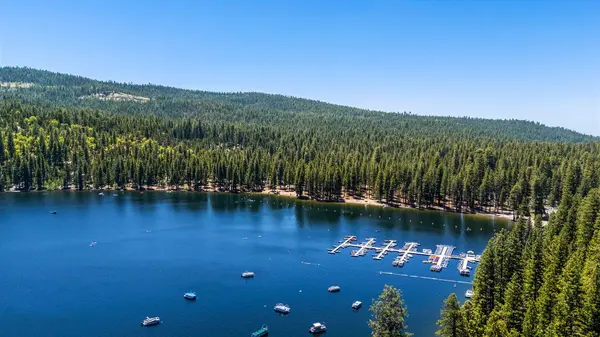
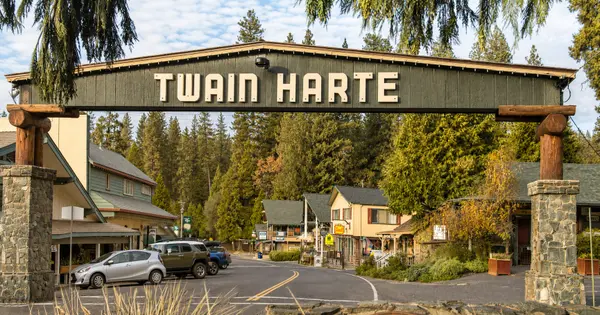
The Charm of Twain Harte: A Mountain Community By Melissa Vallelunga | September 1, 2026 What makes Twain Harte, CA such an appealing mountain community? Twain Harte is a small, unincorporated Sierra foothills community in Tuolumne County with roughly 2,300 full-time residents, a mix of year-round

How to Choose a Tuolumne County REALTOR® in 2026 (From a Lifetime Local)
Why Local Expertise Matters When Choosing a Tuolumne County REALTOR® By Melissa Vallelunga, REALTOR® & Sr. Partner · Twain Harte Homes & Land at Real Broker · Updated August 2026 Why does local expertise matter when choosing a Tuolumne County realtor? A Tuolumne County REALTOR® with genuine local ro
What Happens After You Accept an Offer in Tuolumne County?
What Happens After You Accept an Offer in Tuolumne County? Once you accept an offer in Tuolumne County, escrow opens within a few business days, earnest money is deposited, and a structured sequence of inspections, disclosures, appraisal, and title review begins. Most transactions close in 30 to 4